
Why We Revere Volatile Leaders Despite the Wreckage
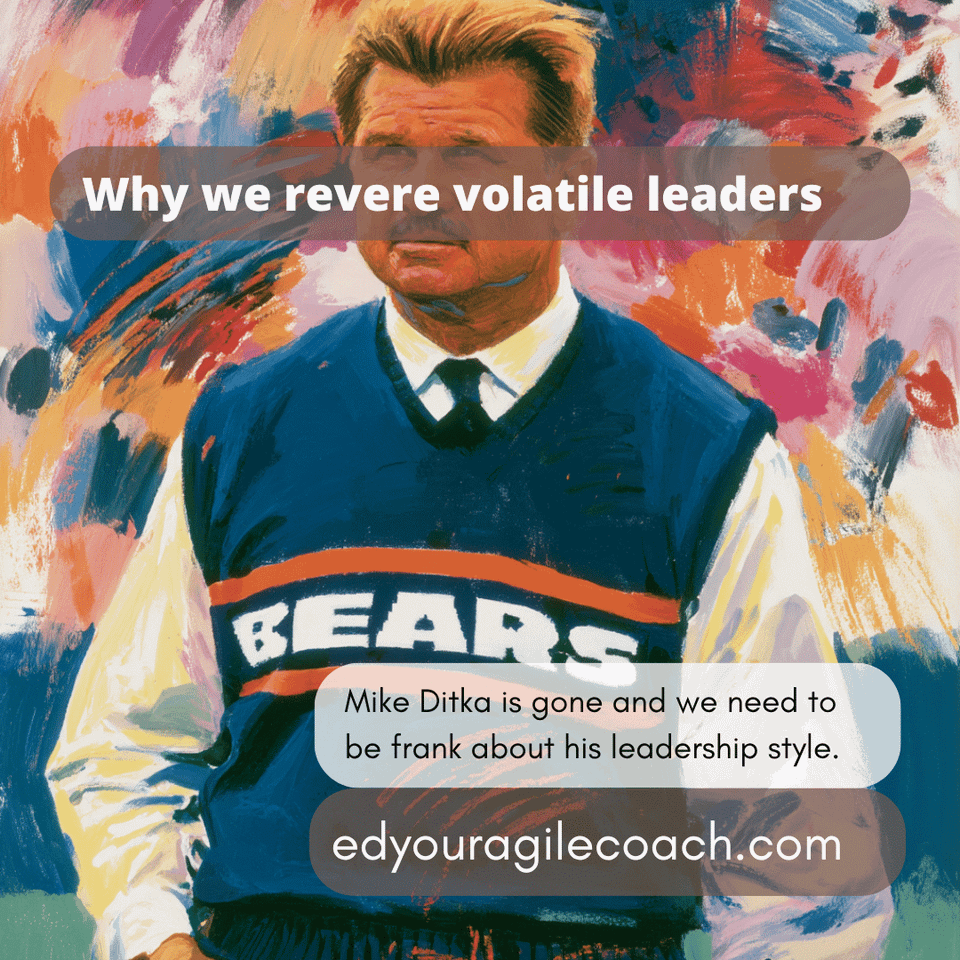
With Mike Ditka's passing at 86, the sports and business worlds are eulogizing a quintessential Chicago icon. But beneath the championship rings and fiery mystique lies an uncomfortable question: at what cost does that leadership style come?
The Making of a Chicago Icon
Before he became a Chicago institution, Mike Ditka played football at the University of Pittsburgh, then joined the NFL. Football in the 1960s was very different from what we see today. Before big money, the league had a blue-collar, tough-guy image. Some players smoked on the sidelines, and concussion protocols were nonexistent. Ditka played for the Bears and the Dallas Cowboys before transitioning to coaching in Dallas.
When Ditka became the Bears' head coach in 1982, the team was in a sad situation. They hadn't made the playoffs since 1977, and their star, Walter Payton, was setting offensive records on losing teams. Ditka, with coach Buddy Ryan, got to work swapping out talent and intensifying the training regimen. Along the way, they built a defensive unit that became one of the best in NFL history, with Hall of Fame players like Mike Singletary, Steve McMichael, and Richard Dent.
The True Cost of the Iron Fist
Ditka was intense and fiery. In many respects, he was the stereotypical tough boss. When players did not execute, he yelled and raged. He expected his players to match the intensity he demanded of himself. It was an intensity that endeared him to the Chicago fans and led to a heart attack that almost killed him in the middle of his career. His success also created a mystique around him that often clouded his judgment. Players who were injured were told to toughen up, and those Ditka thought were not tough enough were singled out for abuse.
The Bears drafted Jim Harbaugh out of Michigan after their Super Bowl win. Ditka made Harbaugh his special project, pushing, prodding, and berating him. The experience shaped Harbaugh and drove him to become an equally intense coach.
The Price of the Legend
That intensity left scars on both sides of the whistle. It is easy to get caught up in the legend of Ditka, but like all leaders, he was human and had significant flaws. He abused alcohol as a form of self-medication. His temper was volcanic, and it often undermined his team's focus. Finally, success isolated him from others who could give him unvarnished advice.
Only two men have won a Super Bowl as a player, assistant coach, and head coach in the NFL. One is Mike Ditka; the other is the Raiders' Tom Flores. I wish I could lead like Ditka, but looking back, the price was too high. He and his players both paid a steep price for his brand of leadership. Every modern leader must critically evaluate that trade-off. And yet, for all the wreckage his fire left behind, Chicago still loved him for it. Rest in peace, Coach.
Until next time.



Comments ()