
What an Angry Meltdown Teaches Us About Scrum Leadership.
I have spent most of my life in the Chicago metropolitan area. It is a lifestyle defined by ugly winters and muggy green summers. They are seasons filled with neighborhood festivals, cookouts, swimming, and social activity that provide a chance to spend time with friends, enjoy a frosty beverage, and escape the everyday to bask in fresh air and sunlight.
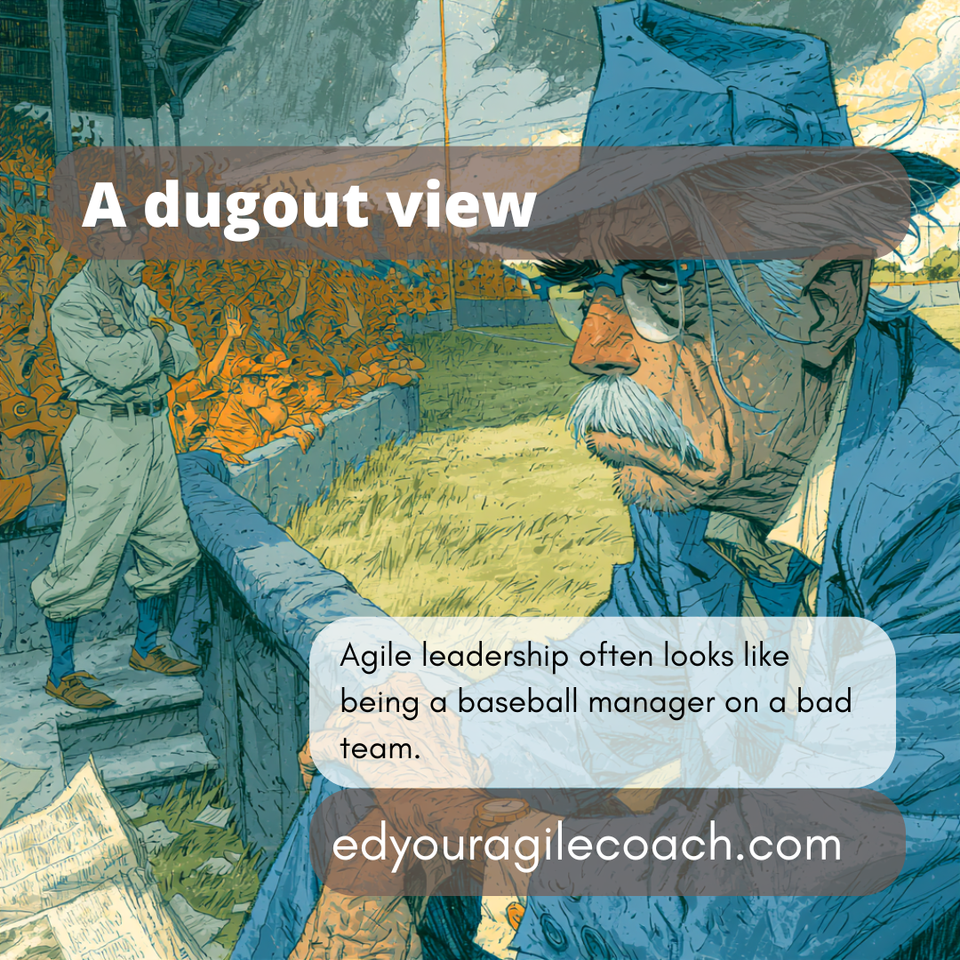
For the first forty years of my life, baseball was disappointing, a sport where brief glimpses of excellence were regularly eclipsed by years of frustration. The people I most identified with were the managers of these awful teams, suffering in silence and watching their squads underperform. Baseball managers are also the first people fired when things go wrong, so anxiety and insecurity constantly follow them. After a difficult week at work, it occurred to me that being a Scrum Master or Agile Coach resembles that role quite closely, and I would like to discuss it.
The Emotional Labor of the Dugout
When you are acting as a Scrum Master, most of your time is spent asking difficult questions, helping clear up obstacles, and helping the team navigate emotional labor. It is not easy because you must absorb the team's emotional overflow while remaining emotionally grounded and focused on the team's goals. You also cannot perform tasks for the team; you must trust their ability to do the work.
This explains why so many top individual performers fail as managers. When the chips are down, they stop leading teams and start doing the tasks the team should handle itself. As a leader, you are in a continual state of uncertainty about whether the work is being done and paranoia that something might get missed. You are just like that baseball manager watching your team from the top step of the dugout.
If a project manager or Scrum Master is like a baseball manager, then the fans are the stakeholders cheering and heckling from the stands. We need to filter out the noise and focus on signs of constructive, serious criticism. We also answer to the executive team, who often make personal and business decisions that we do not fully understand. Finally, we must deal with the egos and the idiosyncrasies of the people playing the game. I am grateful that I don't have to speak with reporters following me around daily, asking me what I think, because on hard days it might lead to a very unpleasant conversation.
The Meltdown and the Turning Point
One day in April 1983, a radio reporter caught Cubs manager Lee Elia on a bad day, and the resulting interview became the stuff of baseball and Cubs legend. Over a grueling three minutes, he addressed the fans, the expectations the press was placing on the team, and the team's frustrating 5-14 start. It was a beautifully profane tirade.
Every person in a managerial role has felt that exact combination of rage and helplessness; fortunately, we don't have a sports broadcaster recording our daily workplace conversations. Elia was replaced at the end of the season, and the Cubs would make the playoffs the next year. Cubs fans of a certain age see Elia's meltdown as a turning point for the Cubs organization because losing was no longer treated as lovable.
Elia's outburst might belong to the past, but it highlights the exact dilemma many Scrum Masters and Agile Coaches face today. We have plenty of responsibility for outcomes but very little direct control. Like a baseball manager, we cannot step up to the plate and hit the baseball for our players. We can only watch from the sidelines, provide coaching, and offer encouragement.
Good managers understand when to get out of the way of their teams and when they need to shake up the status quo. Sometimes leaders need to be serious about their responsibilities; other times, they must inject a bit of whimsy. It is a difficult balancing act, and each day leaders struggle to maintain it.
I do not have easy answers. But as the summer wanes, I am standing right there like that baseball manager, encouraging my team to be better and navigating the quiet struggles of the dugout.
Until next time.



Comments ()