
Swinging the Sword.
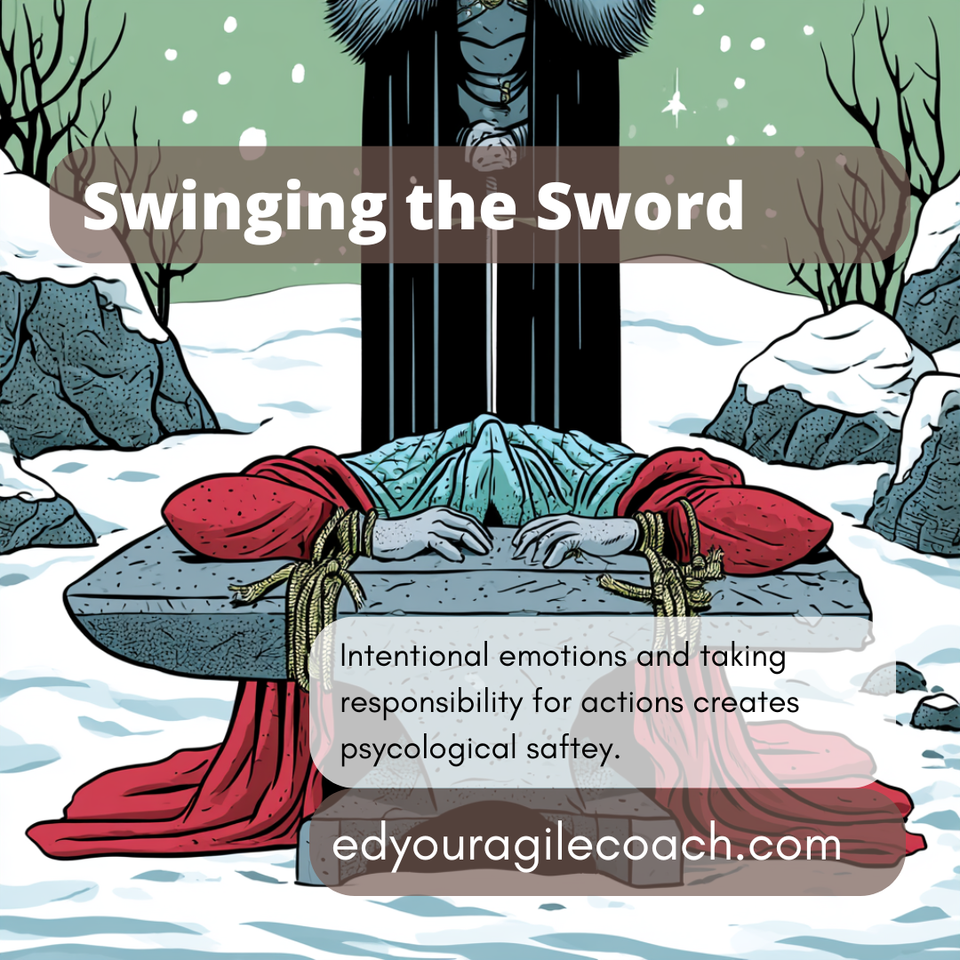
George R.R. Martin opens his epic fantasy novel, A Game of Thrones, with a stark lesson in leadership. A terrified ranger of the Night’s Watch deserts his post after encountering supernatural White Walkers in the frozen north. When Lord Eddard Stark captures the deserter, he doesn't pass the execution off to a henchman or hide behind bureaucratic distance. He hears the man’s final words, looks him in the eye, and executes him.
Afterward, Ned turns to his young son, Bran, to impart a core rule of governance:
"The man who passes the sentence should swing the sword."
If you are going to make a heavy call that impacts human lives, you owe it to them to carry the emotional weight of that decision yourself. To hide behind executioners—or emotional numbness—is the coward’s way out.
In the corporate world, our executioner's block looks different, but the weight is the same. Leading a major project means navigating high-stakes pressure: making tough personnel calls, managing crisis moments, and confronting situations that feel overwhelming. Your burden is not just dealing with those situations, but managing your emotions and the emotions of your team members. Today, I want to take time to discuss how we navigate that burden.
The Mask of Command
Most leaders are taught to wear a mask of command. This mask covers their emotions; if they show any emotion at all, it is usually restricted to anger at poor performance or minor approval for completing a mission. The leader is expected to keep everything bottled up inside and project only unshakeable authority.
However, this approach frequently leads to burnout and substance abuse. Burnout occurs when suppressed emotions inevitably spill over, while substance abuse often becomes a desperate means to numb ongoing stress and pain.
Another popular approach is Stoicism. Stoics recognize that many situations lie outside their direct control or responsibility, so they focus strictly on their internal reaction to those events. An illness, for example, is not a moral failing, but an external reality that impacts people. To the Stoic, worrying about things outside your control is foolish; all you can do is concentrate on what you can control and execute accordingly. It is easy to see why Stoicism appeals to business professionals, as we often operate in a shadow realm of high responsibility but limited authority. Being stoic helps navigate these tricky dynamics.
The Existential Leader
Both approaches have their proponents, but we should look elsewhere for inspiration when addressing emotions in a work context. Existential philosophers provide us with robust tools to process workplace emotions and direct them constructively.
Jean-Paul Sartre explores this in his book Sketch for a Theory of the Emotions. Sartre argues that anger is often a byproduct of deeper underlying emotions, such as a perceived injustice or a feeling of powerlessness. Rather than reacting mindlessly, we should acknowledge the true sources of our emotional responses. Feeling anger about a project doesn't mean you're failing—it means you care deeply about the team's success.
Instead of suppressing that emotion, an existential leader shares why they feel that way and outlines how they intend to navigate through it. To the existentialist, emotions should not be suppressed; they must be acknowledged intentionally, along with the uncertainty and anxiety that accompany them.
For example, when my team failed to deliver on our sprint goals, I explained that my disappointment stemmed from a fear that leadership would no longer trust us to deliver. I also shared that my credibility as an agile professional felt undermined by the outcome. By voicing that vulnerability, I wasn't holding others responsible for my emotions—I was explaining them so my team could understand the stakes. By seeing that emotional honesty, the team didn't retreat into defensiveness; they rallied together to fix the bottleneck and build true psychological safety.
This intentional approach creates a space where people are permitted to disagree, feel their emotions, and remain fully accepted by the team. Approaching emotions with intentionality is a road less traveled, but it is the true pathway to psychological safety.
Swinging the Sword
This brings us back to the grim opening of George R.R. Martin's A Song of Ice and Fire and the bloody lesson taught to Bran Stark. As a leader, you will occasionally have to make hard, uncomfortable decisions to keep a project moving forward. But if you possess the emotional intelligence to know that a tough decision is necessary, taking pleasure in that harshness makes you a poor leader.
Instead of hiding behind a rigid mask of command or retreating into detachment, the existential leader remains intentional and takes full emotional ownership. It’s not a bad way to look at leadership—or life.
Until next time.




Comments ()