
Why Copying Corporate Terror Fails.
Last week overflowed with work and challenges, and it quickly became overwhelming. Fortunately, I recalled the wisdom of one of my colleagues, Beth Yadzinski, who once told me, "You are never going to be done, so do what you can, the best you can." Those words resonated deeply, and since then, I have adopted a healthier attitude about my work and how I approach it.
Writers, software developers, and other creative people talk about being in a state called 'flow.' It is a state where they are at their most creative. Time has no meaning, and words seem to magically move from their mind to the page or screen. It is a rare state, but anyone who works in a creative field will tell you they do their best work when they are in a state of flow.
The trouble with this state is that it does not obey the rules of typical office work. It cannot be achieved in a facilitated meeting. Flow does not respect lunch hours or train schedules. Finally, nothing destroys flow more than giving a status update during the day. These realities explain why people become grouchy during typical office rituals. They understand their state of flow and chafe at things that interrupt it.
It is why office workers have these subtle moments of insubordination. They push back on meetings, are gruff with managers, and insist on schedules that suit them. The behavior is tolerated while these people have ideas that make money. When the cost of pushback outweighs the benefits, these people are pushed out of organizations.
High performers and creative people are essential to making organizations successful, but most business cultures mistreat them. We reward them with more work. Often, they act as duct tape for broken systems. Finally, they struggle with the unwritten rules in an organization. I suspect this is because many business leaders think that human beings can be automated like machines.
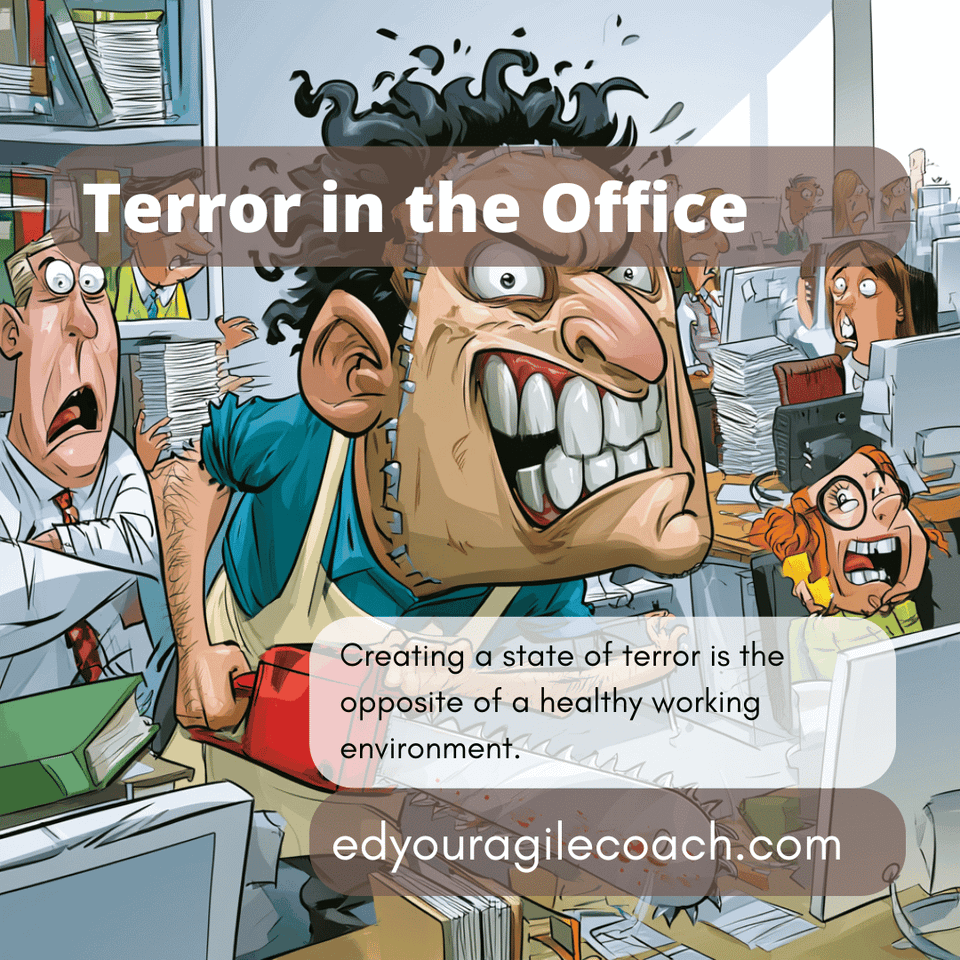
Jeff Bezos stated in a 1999 interview that he wanted his employees to be in a state of terror because if they became complacent, customer service would suffer. I understand why he would say that, but the repercussions include worker burnout, labor exploitation, and widespread public ill will, while generating outrageous profits. Business leaders are the ones to follow trends, then think that if they copy someone else's approach, they will get the same results. The approach is how cargo cults get started. Every business is different and requires its own approach to succeed.
Putting employees in a state of terror is the opposite of putting them in a flow state. Unrealistic deadlines and insufficient personnel to accomplish work grind people up and burn them out. It requires something to counterbalance it, which explains why employees set boundaries with their organizations. Emails are addressed in the morning, action items are started on the next business day, and priorities are reviewed regularly.
It creates a situation where people mentally triage their work. A businessperson looks over their day and decides what matters and what can wait, because we often have too much to do in a single day. Here is where Yadzinski's guidance makes sense. Some things are more important than others, so they will need to wait. Once you understand that, you break free from the guilt cycle and can concentrate on entering a flow state, which leads to good work.
Life is too short to live in a constant state of terror or burnout. Setting limits and accepting that some items must wait will go a long way in making your career less awful.
Until next time.




Comments ()