
Too Big to Fail vs. Too Essential to Forget
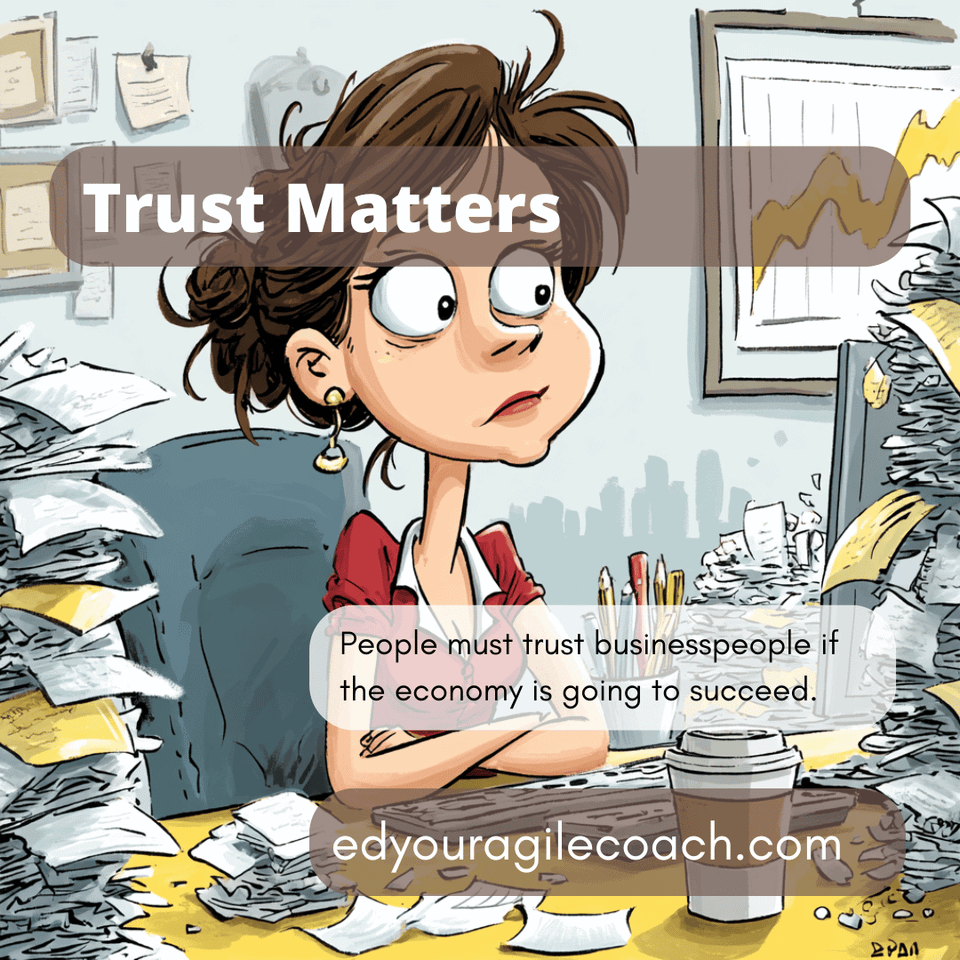
When we look at the world of business, we often think of market share and profits. Larger-than-life personalities and innovators dominate the business press. Everything is about motion, execution, and attention. What often gets lost in the shuffle is the mundane work of providing people with goods and services that deliver real value. We have forgotten that trust makes the business world turn. Today, I want to discuss the importance of trust.
If you are a merchant or businessperson, your life is governed by a simple set of expectations. You provide goods or services and, in exchange, receive a profit. Whether you are selling firewood or luxury sneakers, the difference between the value of the goods you provide and their cost is your profit margin. A positive figure means you are making money; a negative one will eventually lead to bankruptcy. It is the central rule of business, and everything else is just additional complexity.
If you consume goods or services, you make a different calculation. You want to make sure the food you eat is not poisonous, the pocketknife you purchase stays sharp, and the home you live in can withstand a rainstorm. If you do not trust the quality of the goods you receive, you will purchase them somewhere else. Even the largest businesses must cultivate trust with their consumers, or they will enter a long decline before closing.
Businesspeople are terrified of this kind of extinction. To protect themselves, they acquire rivals and attempt to become "too big to fail." This way, consumers have no choice but to use their products because no one else offers the service. It creates perverse situations in which trust is weak, yet there is no other place to purchase the product. When situations like this crop up, the government is supposed to step in and break up these massive businesses into smaller units so that these smaller enterprises can compete to earn consumers' trust. In these ideal situations, prices fall, and quality improves.
We do not live in an ideal world, and businesses push back to maintain market dominance. Millions are spent on marketing and commercials. Business interests lobby elected officials, and some corporations even run candidates to oppose politicians who want to regulate or break up large monopolies. It looks tawdry and shameless because the amount of money at risk is astounding.
I understand that I am a small and specialized gear in this machinery. My role comes with plenty of responsibility and strict attention to detail. I inspire technical professionals daily to deliver solutions that build trust with organizations and customers. When I graduated from high school forty years ago, I did not imagine this kind of life, but it is the one I have embraced. My job is to build and inspire trust.
My customers count on me to keep the project moving forward. If they are to trust my company, they first must trust me. The realization that I am the first person customers and clients will answer to is a heavy burden, but it is one I accept because, without trust, business breaks down. Without trust, the global economy stops spinning—and I wish more business leaders understood that lesson.
Until next time.

Comments ()