
Reading is Your Executive Secret Weapon.
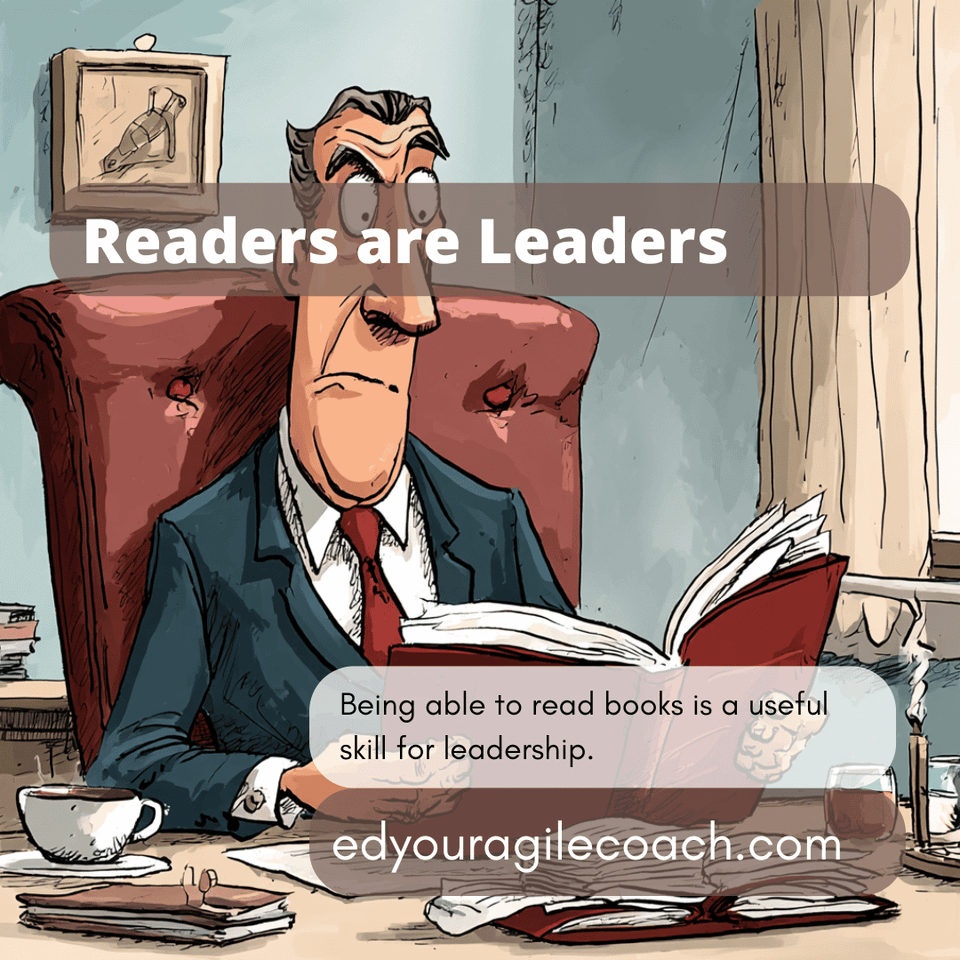
One of the most surprising aspects of being a business professional is the number of managers and leaders who avoid reading. With heavy workloads and a significant volume of decisions, these individuals delegate reading and research to junior employees who create reviews and summaries that are easy to digest. I suspect this is why some business leaders are poor at innovative thinking and at understanding alternative perspectives. It also explains why Artificial Intelligence is so appealing: it creates the illusion of instant summaries and the wisdom of the entire body of human knowledge at minimal cost. I consider this behavior shortsighted, and today I want to argue that reading is a fundamental part of leadership.
I spend plenty of time reading. As a technology professional, I am aware that I must relearn my profession every eighteen months. Surfing blogs, periodicals, and news is one of my regular tasks throughout the day. These sources of information are necessary for success but are not sufficient. What I gain in broad strokes of information, I often lack the deep knowledge and context to put those ideas to work. Reading books helps fill that knowledge gap.
A book helps you linger with ideas, and authors spend time creating connections between different ideas and insights. You also understand the biases and opinions that shape their writing. For instance, when you read Ayn Rand, you immediately know there is a frantic quality to her writing, fueled by handfuls of amphetamines. Likewise, Carl Sagan has a warm, scholarly tone that invites children and adults alike to enjoy the discovery of science. I do not think you can find two writers who are more different, yet each has something important to say.

Writers often use their work to pass down the life lessons they have hard-earned over time. One such work that profoundly influenced me is Eugene Kranz's memoir, "Tough and Competent." In it, Kranz retraces his journey from his youth in Toledo, Ohio, to his days as a fighter pilot in Korea, ultimately leading to his pivotal role in founding NASA after responding to an ad in "Popular Mechanics." It contains plenty of stories of heroism and invention, like the repair missions to the Skylab space station in the 1970s. The memoir also shares the detail-oriented, tedious aspects of space travel, such as the numerous design meetings he presided over during the space shuttle program. Elected officials frequently revised budgets and specifications, repeatedly sending the design process back to square one after every election cycle. When you read Kranz's account, it is miraculous that the space shuttle program was as successful as it was.
Reading accounts from people like Kranz makes me appreciate the challenges that I face. We have bosses who put personal ambition ahead of the organizational mission. We struggle with impossible demands and laughable budgets. Yet the work gets done, and progress happens because tough, competent people put in the effort daily. These realizations give me comfort, and I would not have understood them without taking the time to read Kranz's book.
I doubt that a junior employee writing a summary or Artificial Intelligence could point out that kind of insight. Doing the active work of reading helped me obtain this kind of wisdom. It is why the most insightful question you can ask someone is, "What are you reading?" If they cannot answer that question they you know they have the intellectual depth of a puddle of mud. These are people you must avoid unless you want to share their stain of ignorance.
I do not want to come off as smug or elitist, but people who read regularly are better leaders and people. Not only are they more literate, but they can also see alternative points of view, draw connections between ideas, and formulate new knowledge. We desperately need more of that in our business community.
In that spirit, I have a stack of books on my nightstand. I am reading Bill Pasmore's "Leading Continuous Change." Next, I plan to read Ernest Gellner's book "Nations and Nationalism." I have plenty more, but these two books are in my immediate future. I will be happy to share what I discover in those pages with you. I am disappointed that more businesspeople do not read. Instead of lamenting that fact, I consider my ability to digest this type of information a competitive advantage and one I will gladly use to help my projects succeed.
Until next time.




Comments ()