
Corporate Wilderness Beyond the Castle Walls

I remember reading Matt Taibbi in Rolling Stone describe businesspeople as wealthy individuals who, when they look in the mirror, see skeletons but believe they resemble Brad Pitt. It was a biting critique of how wealth and power distort a person’s self-image into something malignant at the price of self-awareness. Considering current events, it is easy to see that negative personalities dominate the headlines. What I think is lost are the people who are struggling during this chaotic period. The most significant subset is the people looking for work in this low-hire, low-fire economy. Beginning today, I am leaving that group and returning to work. It feels necessary to discuss what I have learned during this transition.
Being a change agent is often described as a poison chalice in the business world because you drive necessary improvements but are considered expendable by leadership. A consultant in this role is like a medieval food taster for a monarch because they fall victim to the political games that bedevil an organization. The compensation is that you are paid more because your job security is tenuous. The risk is that a contract change, budget adjustment, or other factors outside your control lead to unemployment. It is what happened to me when I was rolled off a contract on October 17th.
I would return to work quickly, given my expertise. I even applied for more executive roles, thinking it would be an opportunity to advance my career. It soon became obvious that this job market was different. Hundreds of people were applying for open roles, interviews often took four or five rounds, and recruiters were quoting lower pay rates. I also began to see desperate messages bubble up on social media about unemployment benefits running dry and people losing homes because they could not find work.
Artificial Intelligence was blamed for this white-collar job drought, but the real culprit is the capital spending behind technology investments in data center construction. Plenty of people who wrote code and did research for the technology giants were looking for work, and I was another face in that crowd. With all of this talent in the market, employers could afford to be picky. My quick prospects soon dried up.
I joke that corporations are the last vestige of feudalism in the 21st Century. Power imbalances dominate, leadership is often insular and out of touch, and security and safety are in short supply. People are expected to keep their heads down, do their jobs, and avoid attracting unwanted attention. This is why organizations hire consultants, because they will do the work and take the initiative that the culture has removed from regular employees.
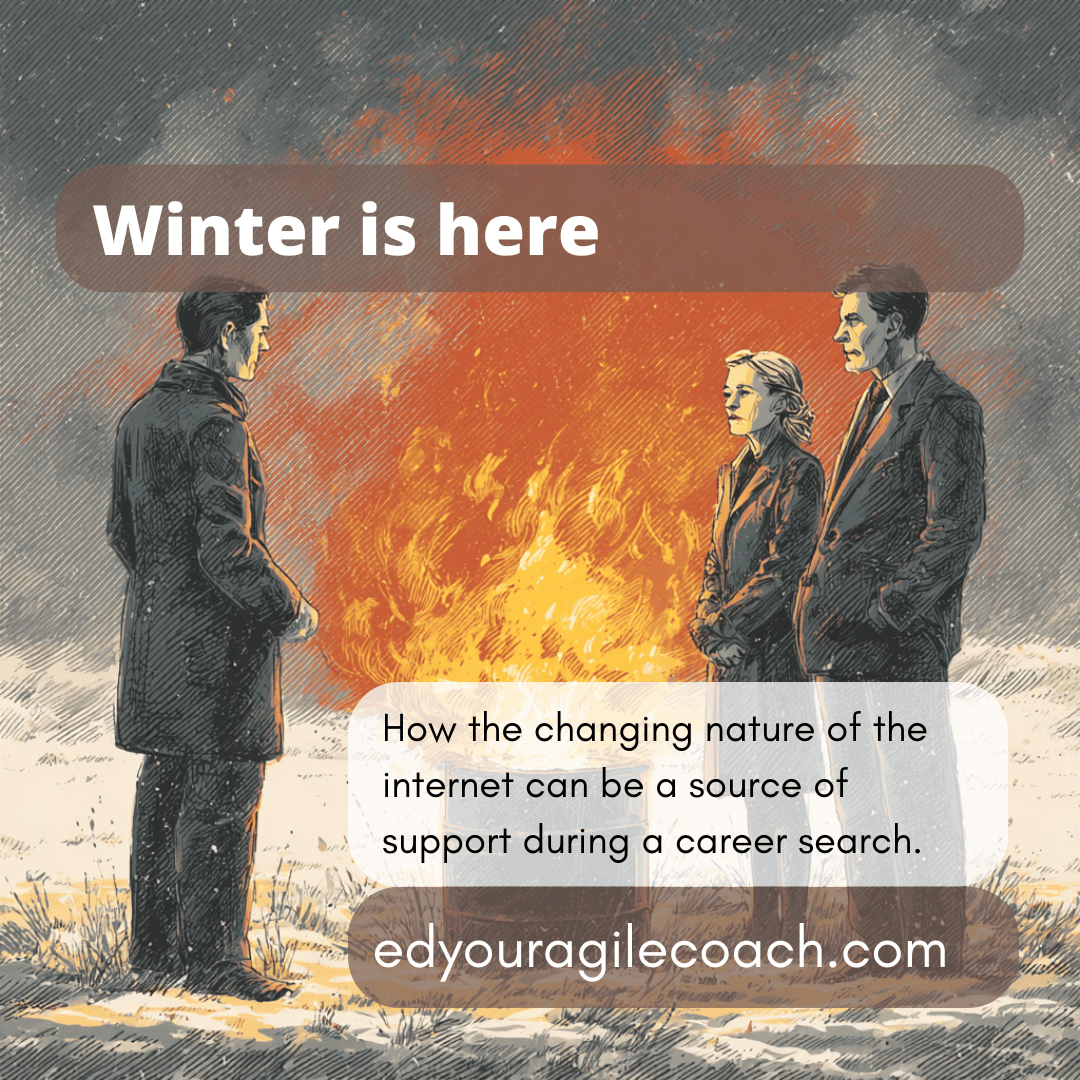
With the economic uncertainty surrounding tariffs, war, interest rates, and the declining dollar, large corporations have grown more conservative. Budgets are getting slashed, and investments are delayed. Workers are naturally worried, and anxiety is dominating. A company is now under siege like a medieval castle, with more people outside shouting at the watchtower, looking for work. Often, we are greeted with silence and neglect because everyone inside the keep is afraid; they might be banished to the career wilderness outside the walls.
It is not completely bleak. Members of the LinkedIn community are reposting jobs they see. Recruiters continue to work the phones and networks to help others find work. Finally, people are using the opportunity to retain and burnish their skills. If Artificial Intelligence dominates the next quarter-century, people like me will be there to build it and to find business cases.
I have applied for more than 315 jobs since October. After interviewing for fewer than twenty, I finally secured an offer. This unforgiving math, especially during the fourth quarter and the holidays, tests a person’s resolve. Through this process, I discovered that I operate as what business leaders call a 'catalyst' and athletes label a 'glue person.' My natural curiosity and desire to see others improve drive me to instigate change and equip teams with the tools to make progress stick. I lead by example, providing the behind-the-scenes support that helps teammates excel. I don't chase a superstar spotlight; instead, I build a steady career defined by accomplishments I can point to with pride.
Many companies are struggling with factors outside their control, and the employees who generate revenue and profit shoulder the burden. Some are sacrificed to keep the organization alive. These sacrifices feel nameless and anonymous in the news, but each data point is a person attempting to support their family and loved ones.
I return to work more mindful of my strengths and am aware of the general weakness of the economy. I understand where I can help and look forward to a less malignant future. It is a good place to be as you return to work.
Until next time.

Comments ()