
Avoiding the Crypto and AI Hangover
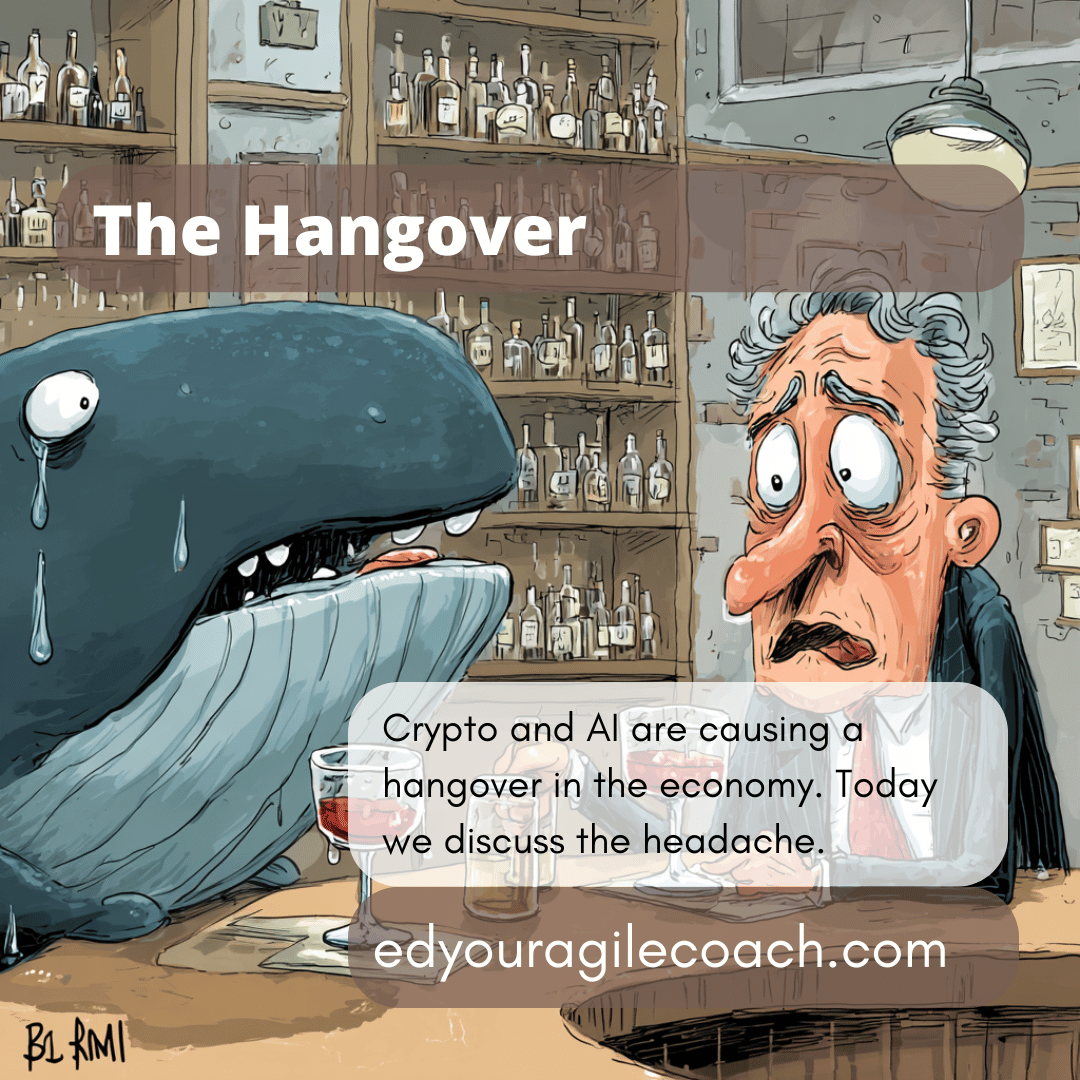
No one is more resented in an office than the person who says, "I told you so." This phrase forces colleagues to admit they were wrong while enduring the speaker's smug moral superiority. Such validation often emboldens these individuals to remain permanent contrarians, leading to their eventual exit for "cultural fit" issues. Consequently, many business decisions suffer when teams avoid necessary honesty because they fear the social fallout of being the one to say, "I told you so." This week, a few items that came across my business feed confirm that there are lots of smart people who are afraid to speak up when leaders make bad decisions.
The Crypto Winter –
Annually, I write a blog making predictions for the New Year. I project out what I know based on public sources in the press. The only insider knowledge I have comes from years of working in the trenches as a technology worker and project manager. Less than 60 days into 2026, one of those predictions has come true.
I have been a vocal critic of cryptocurrencies since the launch of Bitcoin in 2011. The lack of regulation and cultish behavior surrounding the industry made me an early skeptic. Even before the saga of Sam Bankman-Fried cost billions through a fraud scheme centered on his FTX cryptocurrency exchange, cryptocurrency looked sketchy. It does not resemble gambling because when you place a bet in a casino, the rules are clear, and even though the odds are not in your favor, you still have a credible chance of winning. Crypto looks like an investment in blue-sky dreams.
Investors are seeing this, and the prices of prominent cryptocurrencies are falling. As of February 6, 2026, Bitcoin is trading at roughly $69,654 a coin. It is down from its October high of $120,000, and Business Insider says it could fall to $40,000. I think this projection is conservative because the number of retail investors in Bitcoin has declined since it has become so expensive. What is staggering is how volatile this investment is. If you invested $1 in Bitcoin in October 2025, it is now worth fifty-eight cents. Investment returns like this make bankers and economists jittery, and it is swallowing up buckets of wealth. Losing forty cents of every dollar invested is a recipe for poverty.
The impact of this will ripple through the remainder of the economy. With the price decrease, crypto mining is less lucrative, and the technology used to do it will shut down. The market is exposing exchanges as glorified Ponzi schemes, purging the endless wave of cryptocurrencies that emerged under the Trump administration. I confess I felt like I was missing out on the crypto party, but now I am grateful I avoided the hangover.
Rethinking Artificial Intelligence –
The rush to build data centers to power Artificial Intelligence is the largest capital improvement project in human history. It is bigger than the 19th-century railroad boom and the dot-com bubble. I noticed this back in 2024, and others are starting to notice.
Amazon laid off 15,000 people to free up cash for more AI investment. The stock market is in convulsions about Claude and its legal suite of agents. Software companies are taking a hit in value as investors wonder whether they can compete with AI companies. Finally, Microsoft CEO Satya Nadella is beginning to walk back his enthusiasm toward AI and Microsoft Copilot.
Understandably, this is happening when companies are spending eye-watering sums on data centers and do not have a clear plan to recoup those costs. It also feels that many organizations are struggling to incorporate Artificial Intelligence into their workflows. These AI agents are fast, but they cannot make judgment calls. More troubling, if they make a mistake, who do you hold accountable for the error? These two factors are why many businesses are struggling to adopt Artificial Intelligence. Workers are also afraid of being made redundant, so they are less enthusiastic about using the technology. It has created a perfect storm of risk, and innovative companies will pull back to avoid losing everything.
As a technology professional, I hate being the person who says, "I told you so." Unfortunately, it has to be said, and as we struggle in this economy to hold people accountable for risky and poor decisions.
Until next time.




Comments ()