
Algorithms Don't Have Chops and the Human Margin in the Age of AI
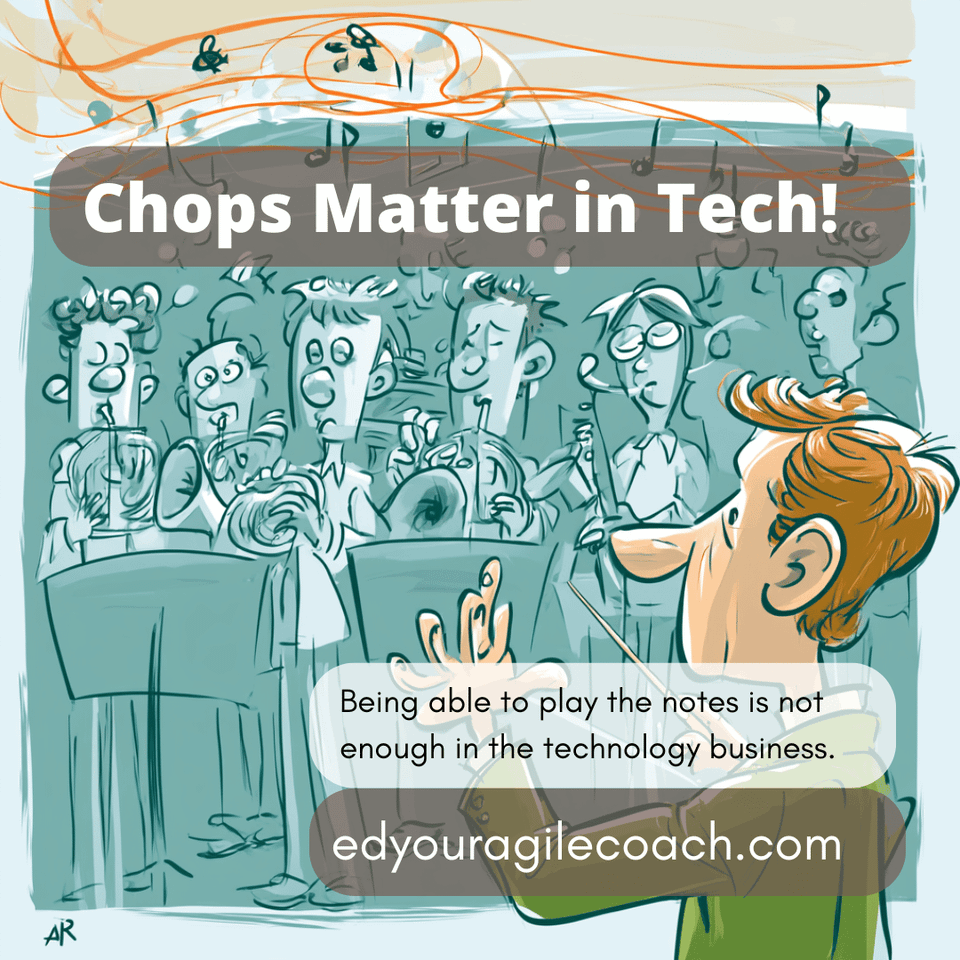
When we look at the technology business, it often resembles playing live music. Executives think business is a symphony, with the conductor taking center stage and every note played with clockwork precision. My experience is different. I see it like jazz or blues in a smoky speakeasy. The audience is paying partial attention, a fight could break out at any moment, and the band must put on a performance with as much professionalism as they can muster. Musicians in Rock, Jazz, and Blues often use the phrase 'chops' to describe good players. A person with chops is the kind of musician who has acceptable technical skills but also can coax an emotional reaction out of an audience. People with chops show up, perform their hearts out on stage, and then move on to the next gig. It is a form of professionalism that all musicians respect. Software development, in many respects, resembles being a touring musician; as leaders, what does it look like to develop chops in our players?
I joke with my technology partners that I was a mediocre software developer. To someone outside the business, I could do extraordinary things, but to a replacement-level developer, I was average. It is how most professions behave. There is a competent middle of professionals doing the job, and two extremes of excellence and incompetence. Founders and human resources departments are looking for excellence and seeking mythical, 'times-ten' engineers who can turbocharge an organization. The reality is that those people are expensive and often work on their own projects rather than for someone else.
Managers are forced to find average developers and develop them into more productive contributors. It is painstaking work, and technical professionals often leave because they are offered more money or to escape toxic environments. It explains why Artificial Intelligence tools have become so popular in the coding world. Now, leaders can augment their technical professionals with tools that are nominally meant to make them more productive. Consider the difference between digging a water main by hand versus using a backhoe. A project that once took weeks now wraps up in hours—and in business, that saved time is pure profit. Artificial Intelligence aspires to shift the bell curve toward excellence by providing quick answers to common questions. Time spent looking things up is reduced.
The promise of Artificial Intelligence and automation is to transform everyone working in technology into a 'time-ten' engineer, at no cost and with no messy human interaction. Unfortunately, business and technology require human creativity, expertise, and, for lack of a better word, chops to get things done. Automated systems break down when confronted with unfamiliar situations. Experience gained over decades is challenging to encode into a large language model. The habits and practices of success are difficult to quantify. This is why I believe Artificial Intelligence will be a powerful tool, like electricity and the steam engine, but it will not replace the human qualities we need in business.
A large language model will never have chops. Humans do. It is why I suspect that when organizations are hiring, they look for credentials and certifications, because while they may not be a perfect representation of competence or chops, they do approximate it.
When I studied for the PMP exam, I took a forty-hour course, spent three months studying, and took practice tests. It seems excessive to me, but in hindsight, I realize that the process of preparing for the exam was a kind of hazing ritual. The definitions, PERT charts, and countless multiple-choice questions taught me how to think like a project manager. It also gave me a common language so I could discuss with other Project Managers, and we would both understand each other thoroughly. I am sure the CPA exam does the same thing for the accounting profession.
Certifications do not guarantee that someone has the chops for their job, but they are more likely to indicate a baseline level of competency. It explains why they have become shorthand for skill and why organizations demand specific credentials when hiring. The odds are better when someone has the credentials. The biggest challenge in the technology business is to find people who can get the job done and have chops. Artificial Intelligence is a shortcut, but it does not deliver the value it promises. Only humans with experience and skill can do that, and that is why technology is such a difficult business.
Until next time.

Comments ()